


By John — Desalination News
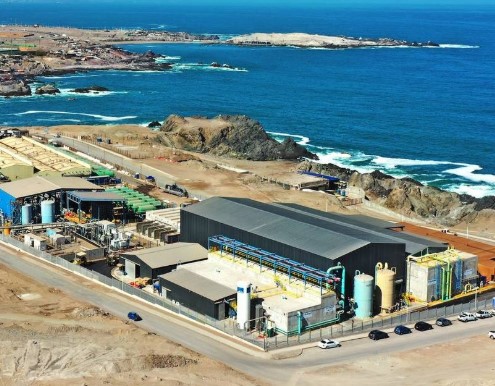
Chile’s environmental regulator in the country’s far north has unanimously approved a $64.5 million seawater desalination plant intended to backstop drinking water supplies for Arica, the northernmost city in the country and one of the driest urban areas in South America. The Regional Environmental Assessment Commission for the Arica y Parinacota region, known locally as COEVA, cleared the project’s environmental impact study on November 6, giving Aguas del Altiplano, the regional sanitation utility and a subsidiary of Grupo Aguas Nuevas, the green light it needed to move the plant toward construction.
The approved facility will produce 200 liters of desalinated seawater per second, drawing on the Pacific Ocean to supplement the groundwater and inland surface-water intakes that currently supply Arica, a city of roughly 200,000 people that sits in the Atacama Desert region, among the most arid stretches of land anywhere on earth. Mario Calderón Barbas, Grupo Aguas Nuevas’ regulation and environment manager, described the plant as a complementary rather than a replacement source, designed to diversify the city’s water portfolio away from near-total reliance on aquifers that have come under sustained pressure from decades of mining activity, agricultural demand and a regional climate that offers little in the way of natural recharge.
Arica’s predicament is a familiar one across Chile’s northern regions, where chronic water stress tied to mining, agriculture and urban growth has pushed utilities and industrial users toward the ocean as a source that drought cannot deplete. Chile’s desalination sector has expanded rapidly over the past decade on the back of that dynamic, with mining companies in the Atacama and neighboring regions increasingly required or incentivized to draw seawater rather than compete with communities and ecosystems for scarce continental water. Municipal utilities such as Aguas del Altiplano have more recently followed the same logic, treating desalination not as an emergency measure but as permanent infrastructure meant to secure supply for decades rather than years.
The $64.5 million price tag covers the plant itself, though Grupo Aguas Nuevas has not yet disclosed a construction start date, a completion timeline, or how the project will be financed, and the approval leaves open questions that typically follow an environmental permit in Chile, including whether the investment will eventually be passed through to customers via higher water tariffs. Company officials have said the project is expected to generate jobs during both its construction and operating phases, a detail regulators and local officials in resource-dependent regions like Arica y Parinacota tend to highlight prominently when large infrastructure investments clear their final environmental hurdle.
For a city where the gap between water demand and reliable natural supply has widened steadily, the unanimous nature of the commission’s vote suggests local authorities see relatively little controversy in the project, in contrast to the more contested desalination fights that have played out elsewhere in Chile and the wider region over brine discharge, marine protected areas and coastal access. Whether Arica’s plant reaches construction quickly will depend on financing arrangements that remain undisclosed, but the environmental approval removes what is typically the single largest regulatory obstacle facing a new desalination project in Chile, leaving Aguas del Altiplano to turn next to the commercial and engineering steps needed to bring 200 liters a second of new water online for a city that has little margin left in its existing supply.
(Source: Reporte Minero, Grupo Aguas Nuevas)