


By John — Desalination News
Toray Industries has unveiled a new family of seawater reverse osmosis membranes that the Japanese materials giant says rejects salt and boron more effectively than any of its current products, a development aimed squarely at desalination plants in the Middle East and other regions chasing cleaner water and lower energy bills from the same equipment footprint.
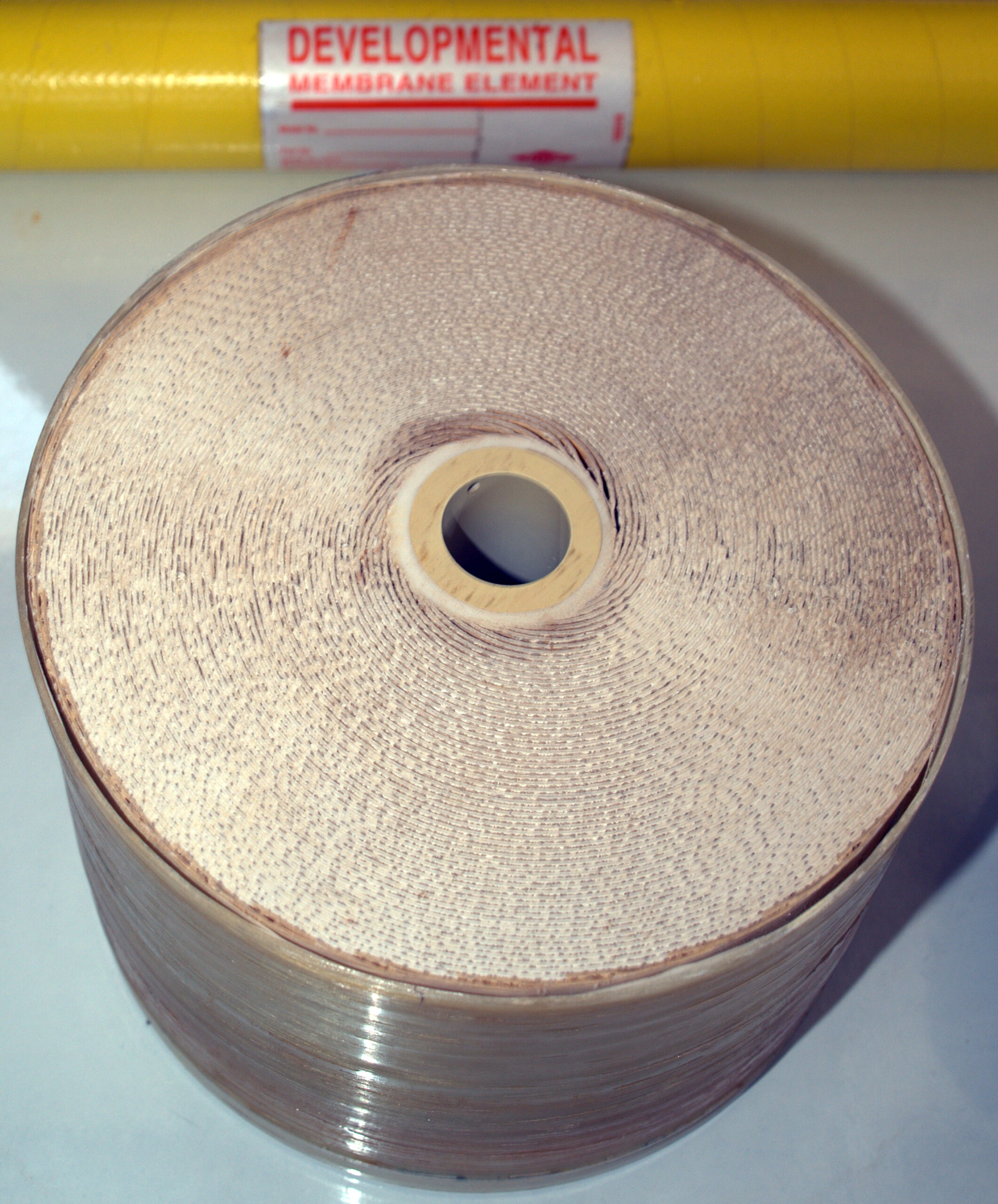
The new TSW-K, TSW-M and TSW-V series, announced by Toray earlier this year with commercial sales targeted for October, trace their performance gains to years of research into the pore structure of the polyamide material that forms the heart of a reverse osmosis membrane. Toray’s engineers studied how pore size distribution and the interaction between membrane and water molecules affect what passes through and what gets blocked, then used that work to design membranes with salt permeability the company says is up to 55 percent lower than its existing TSW-M and TM820M elements. Under standardized test conditions using seawater-strength brine, Toray reports salt rejection rates of 99.92 percent for the TSW-K, 99.91 percent for the TSW-M and 99.90 percent for the TSW-V, alongside boron rejection of 96, 95 and 94 percent respectively, figures the company describes as unmatched among competing membranes on the market. The three variants trade off against each other in daily output, with the standard 440-square-foot elements rated to produce between roughly 24 and 38 cubic meters of permeate a day depending on which of the three is chosen, giving plant operators a way to balance raw throughput against salt and boron removal depending on the water-quality standard they need to hit.
The practical appeal for desalination operators lies less in the headline rejection numbers than in what they could let plants stop doing. Many seawater RO facilities, particularly those serving drinking-water or industrial customers with strict boron limits, run water through two full passes of membranes to get boron down to acceptable levels, a process that roughly doubles the energy and capital cost of treatment compared with a single pass. Toray is positioning the new series as capable of hitting those same boron targets in some applications with only one pass, which would let newly designed plants skip the second treatment train altogether and let existing two-pass plants either cut their energy use or push more water through the same infrastructure. The higher chemical resistance built into the new membranes is aimed at the same underlying problem from a different angle, since membranes that degrade less during the acid and chlorine washes used to clear biological fouling hold onto their rejection performance for longer between replacements, a meaningful cost factor for plants that cycle through tens of thousands of membrane elements over their operating life.
Toray showcased the series at the Singapore International Water Week in June, underscoring Southeast Asia and the Gulf as the markets it expects to adopt the technology fastest, and the timing follows the company’s recent push to expand its reverse-osmosis manufacturing and supply footprint, including a factory it operates in Dammam, Saudi Arabia, and a separate order earlier this year to supply low-fouling RO elements for Singapore’s Changi NEWater Factory 3 water reclamation plant. Toray’s October target for the start of commercial sales has now passed, though the company has not published further detail confirming shipments are underway or naming its first customers, so the series is best understood for now as a technically detailed but still largely untested claim rather than a verified field deployment. Reverse osmosis membranes remain one of the most closely watched components in desalination economics, since even modest gains in salt rejection or energy efficiency compound across plants that can run continuously for two decades or more, and Toray’s bet is that nanopore-level engineering, rather than a wholesale change in membrane chemistry, is where the next round of efficiency gains will come from.
(Source: Toray Industries, International Desalination Association)