


By John — Desalination News
BHP is exploring a sale of the desalination plant and power transmission network that supply its Escondida copper mine in northern Chile, in a deal that could value the combined infrastructure at $1.5-2 billion, according to reports on the process.
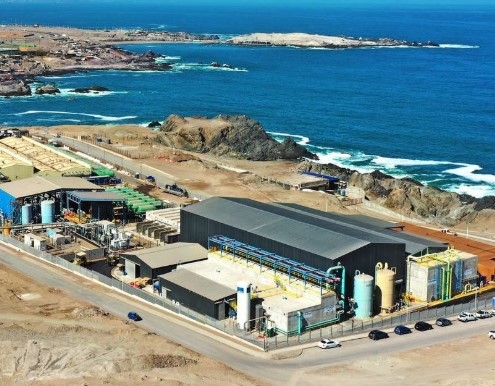
The assets under review are the Puerto Coloso desalination plant, which supplies Escondida — the world’s largest copper mine — with fresh water, and roughly 1,000 kilometers of electricity transmission lines that feed mining operations across the Atacama region. Advisers value the transmission lines alone at $1-1.3 billion and the desalination plant at $500-700 million, according to people familiar with the matter. BHP has declined to comment, and the process remains in an early stage with no buyer selected and no final decision made.
Potential buyers under consideration reportedly include transmission companies, regulated utilities, and infrastructure or pension funds — investors drawn to the predictable, long-term cash flows that come with contracted water and power supply to a mine of Escondida’s scale, rather than exposure to copper prices themselves.
The move fits a broader pattern for BHP, which has been shedding non-core infrastructure to concentrate capital on copper production as global demand for the metal accelerates alongside electrification and data-center growth. BHP has invested more than $4 billion in desalination capacity at Escondida over the years specifically to remove the mine’s dependence on freshwater aquifers in one of the driest regions on Earth — a shift that also addressed years of criticism and legal disputes over groundwater depletion in the Atacama. Puerto Coloso now supplies the bulk of Escondida’s operational water needs, pumped roughly 3,000 meters in elevation and more than 170 kilometers inland to the mine site.
The potential sale comes as Escondida just posted its best annual output in 17 years, and as BHP pursues permits for a multibillion-dollar expansion of the mine. Selling the water and power infrastructure — while presumably retaining long-term supply contracts to keep the mine running — would let BHP redeploy capital into the expansion itself rather than carrying the infrastructure on its own balance sheet.
The Chilean desalination-for-mining sector has grown rapidly over the past decade as miners in the Atacama, one of the world’s driest regions, shift away from continental groundwater to seawater to meet both operational needs and increasingly strict environmental permitting conditions tied to aquifer protection. Chile has emerged as one of Latin America’s largest desalination markets on the back of this shift, with billions of dollars in mostly multi-purpose projects — supplying both mines and, increasingly, municipal drinking water — now under development or in operation along its northern coast.
A sale of Puerto Coloso would be one of the largest mining-linked desalination infrastructure transactions in the region if it proceeds, and would be closely watched as a test of investor appetite for standalone water infrastructure serving the mining sector — an asset class that has historically been built and held by the miners themselves rather than sold to third-party infrastructure investors. For a company like BHP, the calculus is straightforward: infrastructure that guarantees water and power supply is valuable to own only for as long as no one else can offer the same certainty at a lower cost of capital.
No timeline has been given for when a sale process might conclude, and BHP has not confirmed that a transaction will go ahead.
(Source: Rio Times) (Source: Bloomberg)