


This comprehensive review explores both established and emerging desalination technologies, assessing their performance based on energy efficiency, environmental impact, reliability, and operational flexibility. The study emphasizes the growing global demand for freshwater and the critical role desalination plays in addressing water scarcity, particularly in regions like Saudi Arabia.
The authors classify desalination methods into thermal and non-thermal categories, including:
- Thermal methods: Multi-stage flash (MSF), multiple-effect distillation (MED), and membrane distillation (MD).
- Non-thermal methods: Reverse osmosis (RO), electrodialysis (ED), forward osmosis (FO), and ion exchange (IX).
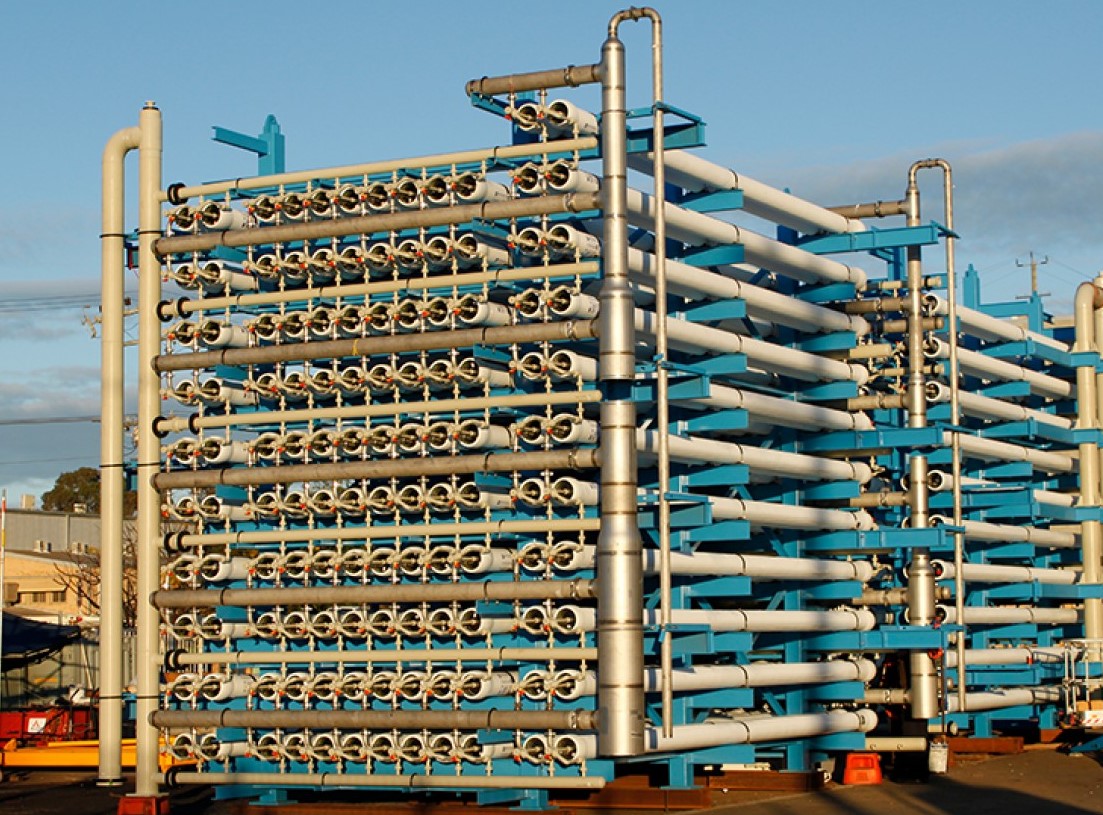
Reverse osmosis (RO) emerges as the dominant technology due to its lower energy consumption and reduced carbon emissions. However, hybrid systems and emerging methods like MD and FO are gaining attention for their potential to improve efficiency and sustainability.
The review introduces a comparative framework using sustainability metrics to evaluate each technology. It highlights the importance of integrating renewable energy sources, optimizing brine management, and recovering valuable minerals to reduce environmental impacts and improve economic viability.
Saudi Arabia’s strategic shift toward RO and clean energy integration is showcased as a model for sustainable desalination. The study concludes that while RO currently leads in performance, continued innovation and policy support are essential to advance alternative technologies and meet future water demands sustainably.
(Source: MDPI)