


By John — Desalination News
Researchers at the University of Texas at Austin have published a study arguing that desalinating salty groundwater and oilfield wastewater could be a viable way to cool the data centers powering the artificial intelligence boom, offering a path to meet AI’s surging water demand without drawing further on already-stressed freshwater supplies.
The study, led by the university’s Cockrell School of Engineering and the Jackson School of Geosciences’ Bureau of Economic Geology, was published in the journal Water Research and posted online in September. Rather than testing a built cooling system, the team modeled the engineering, cost and energy trade-offs of treating a range of saline water sources — from mildly brackish groundwater to the far saltier water produced alongside oil and gas drilling — so it could be used in the evaporative cooling systems most large data centers rely on.
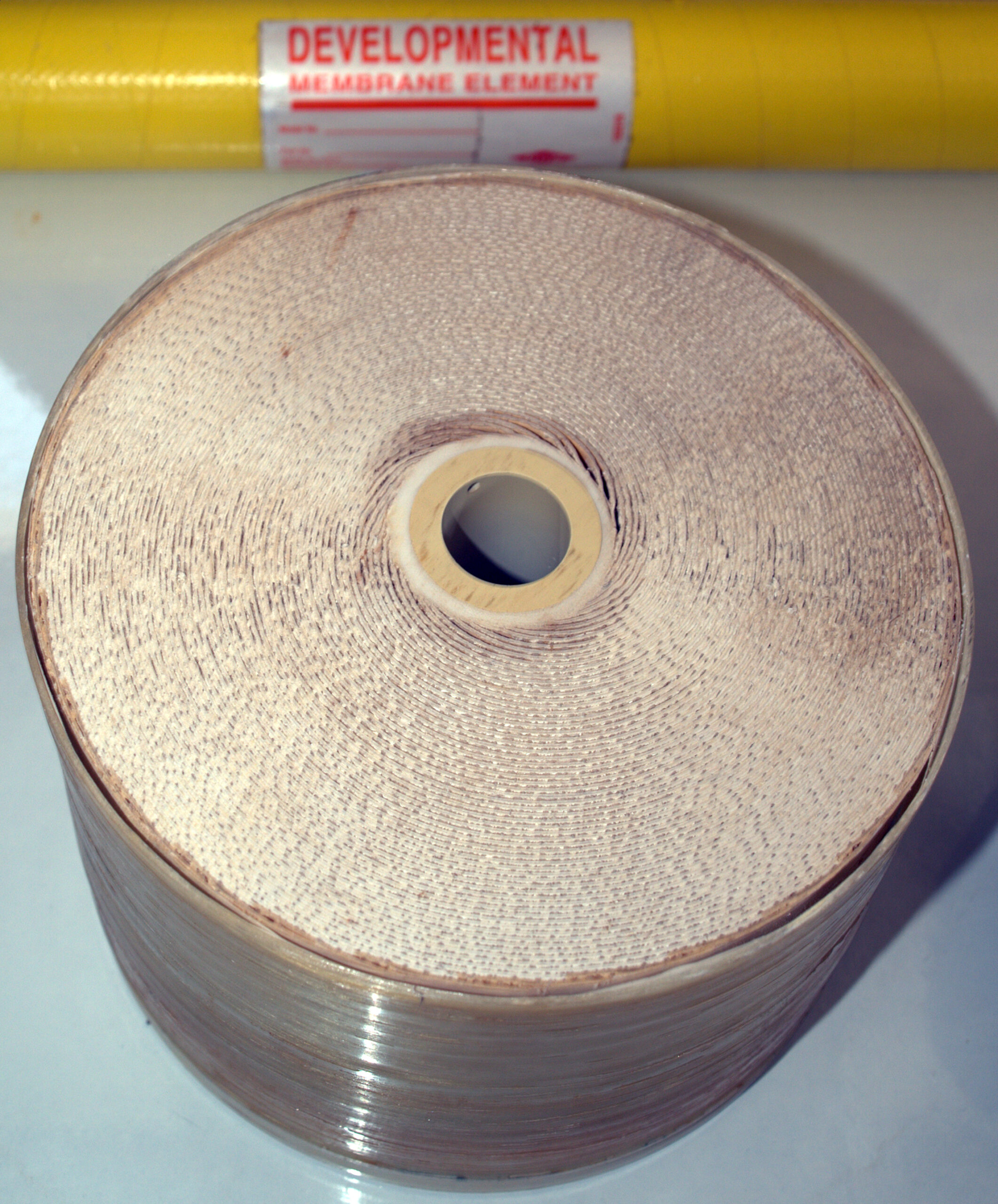
The researchers compared two main treatment approaches. Membrane-based reverse osmosis, the technology behind most seawater and brackish desalination plants, is generally the more energy-efficient option, but its performance degrades as water salinity rises, and it struggles with the highly concentrated brines produced alongside oil and gas. Heat-based evaporation and condensation methods can handle that more concentrated water, but demand considerably more energy and are more prone to mineral scaling that fouls equipment over time. To compare the options on a consistent basis, the team introduced a new metric they call Saline Water Utilization Intensity, which weighs each treatment pathway’s effect on local water stress rather than judging it on energy use alone.
Among three hypothetical data-center scenarios the researchers modeled, a project in Longview, Texas, using brackish groundwater treated through two-stage reverse osmosis came out with the lowest local water-stress score of the three. The paper’s broader finding, though, is more about the economics than any single site: even the most energy-intensive of the treatment options studied consumed only a small fraction of a data center’s total energy demand, meaning the added cost of treating difficult water is unlikely to be the deciding factor in where AI infrastructure gets built.
Desalination News reported in August on Gulf states ramping up desalination spending specifically to meet AI data centers’ water needs, a dynamic now playing out in Texas as well, where the oil and gas industry already produces vast volumes of salty wastewater that has historically been injected underground for disposal. The UT Austin team points to that produced water as a logistically convenient supply for data-center cooling in Texas specifically, arguing that reusing it for cooling would also ease pressure on underground injection, which has been linked to induced seismicity in parts of the state.
The researchers caution that their findings are based on modeled scenarios rather than an operating facility, and that project-specific results will vary with local water chemistry, the recovery rate a given treatment train can achieve, and how the leftover concentrated brine is disposed of. Still, the study adds a concrete framework to a question utilities and data-center developers are increasingly asking in water-stressed regions: whether treating marginal, non-potable water sources — rather than competing for scarce fresh supplies — is the more sustainable way to keep AI’s expanding physical footprint cool.
(Source: EurekAlert, Knowridge Science Report)