


By John — Desalination News
VA Tech Wabag and its Kuwaiti joint-venture partner Heavy Engineering Industries & Shipbuilding Company (HEISCO) have signed a contract worth roughly KD 114.3 million (about $371.5–372 million) to build a major new seawater desalination plant in Kuwait, marking the Indian water technology group’s first project in the country.
The contract, confirmed on August 25, 2026, covers the Doha Seawater Reverse Osmosis (SWRO) Desalination Plant with Recarbonation System — Stage II. The project name refers to Kuwait’s Doha area on the Gulf coast, not the Qatari capital of the same name. It was awarded by Kuwait’s Ministry of Electricity, Water and Renewable Energy (MEWRE) following approval from the country’s Central Agency for Public Tenders (CAPT), with the underlying award dating back to June 2026 and the commercial contract now formally inked.
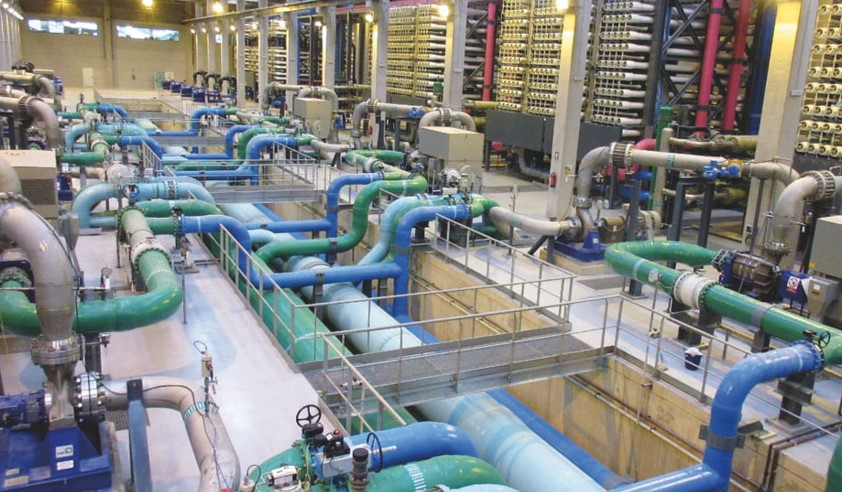
The plant will use seawater reverse osmosis (SWRO) technology, in which seawater is forced through semi-permeable membranes under high pressure to strip out salt and other dissolved solids, producing potable water. Once complete, the facility is designed to produce 60 million imperial gallons per day (MIGD) — around 272 million litres per day — enough to supply a substantial share of Kuwait’s municipal water demand. The design also incorporates on-site solar photovoltaic capacity to offset part of the plant’s energy needs, a nod to Kuwait’s efforts to trim the carbon footprint of its notoriously energy-intensive desalination sector.
The contract follows a design, build and operate (DBO) model: WABAG and HEISCO will handle design, engineering, procurement, construction and commissioning over a 36-month build period, followed by a five-year operation and maintenance phase.
Kuwait, like its Gulf neighbors, has no permanent rivers or lakes and relies almost entirely on desalinated seawater for drinking water, making new capacity a matter of basic infrastructure resilience rather than discretionary investment. The country has faced recurring summer strain on its water and power networks, and regional desalination capacity has also drawn security attention this year after Gulf plants were targeted amid wider Middle East tensions — underscoring why governments across the region continue to treat desalination expansion as a strategic priority alongside a commercial one.
For WABAG, the deal opens further ground in the Gulf Cooperation Council (GCC), a region where the company has already built a substantial order book in Saudi Arabia. Partnering with HEISCO, a well-established Kuwaiti engineering and shipbuilding contractor, gives the joint venture local execution capacity and is a common structure for large state-tendered infrastructure projects in the Gulf, where authorities typically favor a mix of international technology expertise and domestic delivery partners.
The project adds to a steady stream of desalination contract awards across the Gulf this year, as governments from Saudi Arabia to the UAE and Kuwait continue to expand capacity to keep pace with population growth, industrial demand and, increasingly, the water needs of data centers and other power-hungry infrastructure. With construction not due to complete for three years, the practical impact on Kuwait’s water supply is still some way off, but the signing itself is a concrete milestone in a project that has been moving through Kuwait’s tender and approval process since earlier this year.
No completion date beyond the 36-month construction estimate has been disclosed, and neither WABAG nor Kuwaiti authorities have released further financial or technical details beyond those confirmed in this week’s contract announcements.
(Source: MEED) (Source: Zawya) (Source: SaudiGulf Projects)