


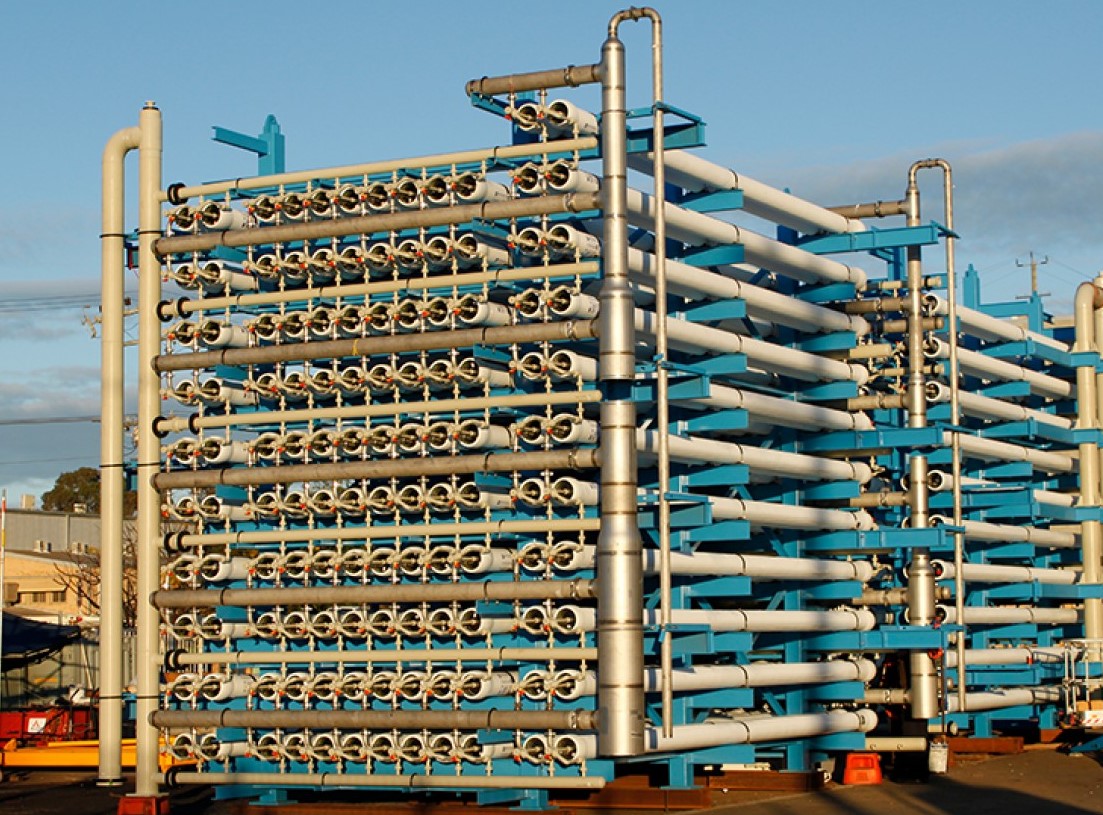
The global reverse osmosis (RO) membrane market is projected to grow from USD 4.3 billion in 2024 to USD 9.5 billion by 2034, at a CAGR of 8.2%. This growth is driven by increasing water scarcity, rising demand for clean water, and expanding desalination infrastructure—especially across the Asia-Pacific region.
Key Market Segments
- Material Types:
- Thin Film Composite Membranes dominate with 78.3% market share due to high filtration efficiency and durability.
- Cellulose-Based Membranes include cellulose acetate and nitrocellulose variants.
- Filter Modules:
- Spiral-Wound Modules lead with 67.2% share, favored for compact design and energy efficiency.
- Other types include hollow-fiber, tubular-shaped, and plate-and-frame modules.
- End-Use Applications:
- Desalination Systems hold 48.7% of the market, addressing freshwater shortages.
- Other uses include residential, municipal, industrial purification, and medical diagnostics.
Regional Insights
- Asia-Pacific leads with 43.8% market share, driven by large-scale desalination projects and urbanization.
- North America and Europe show steady growth due to technological advancements and environmental regulations.
Market Drivers & Trends
- Investment Surge: Governments and private entities are funding desalination projects to ensure water security.
- Technological Innovation: Advances in membrane efficiency and energy reduction are expanding adoption.
- Privatization: Shifting ownership and funding models are reshaping the desalination landscape.
Challenges
- High operational costs and energy demands remain barriers, though innovations like subsea desalination are emerging to address these.
Key Players
Major companies include Alfa Laval, DuPont, AXEON Water, LG Chem, Toray Industries, and Hydranautics.
(Source: Market US)