


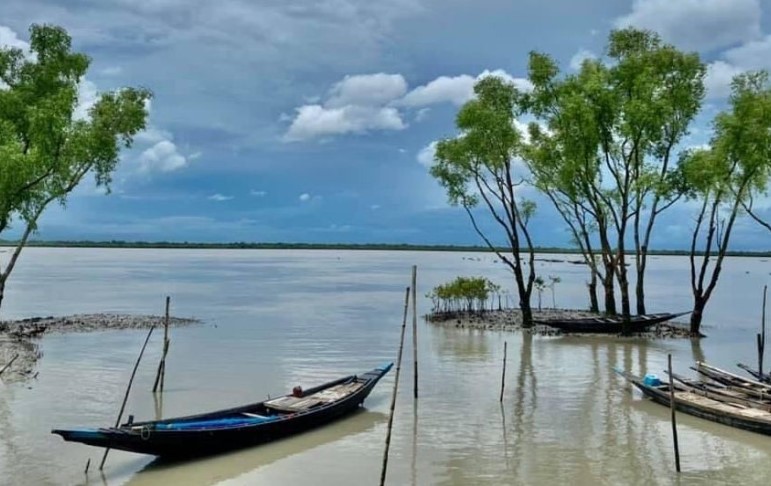
Coastal Bangladesh is grappling with a dual crisis—rising salinity and freshwater scarcity—driven by climate change, poor infrastructure, and upstream water mismanagement. Around 30 million people in these regions depend on increasingly saline and unsafe water sources like rivers, ponds, and tube wells. In some areas, salt levels in drinking water reach 2.5 grams per litre, posing serious health risks, especially for women and children.
Health and Social Impacts
- High sodium intake from drinking water is linked to maternal health issues such as pre-eclampsia and hypertension.
- Waterborne diseases like cholera, typhoid, and diarrhoea are 14% more prevalent in saline-prone areas.
- Women and children bear the brunt, spending hours collecting water and facing increased health and economic vulnerabilities.
Root Causes
- Sea level rise and climate change intensify salinity intrusion.
- Inadequate infrastructure leaves rural communities reliant on contaminated sources.
- Upstream water diversions reduce river flow, pushing saline boundaries inland—up to 40 km during dry seasons.
A Sustainable Solution: Solar-Powered Desalination
Reverse osmosis (RO) is a proven method for desalinating water, but it demands consistent power—often unavailable due to frequent load shedding in rural areas. Integrating solar photovoltaic (PV) technology with RO systems offers a sustainable alternative.
Bangladesh receives ample sunlight (4–6 kWh/m²/day), making solar energy a viable and clean power source. Solar-powered RO plants can:
- Improve public health by providing clean water.
- Reduce time and labour, especially for women and children.
- Enhance climate resilience and reduce dependence on fossil fuels.
- Support economic growth and education by freeing up time and resources.
Scaling the Impact
To expand solar desalination, Bangladesh needs:
- Supportive policies and incentives for renewable energy.
- Funding mechanisms like grants, CSR contributions, and community donations (e.g., Zakat).
- Community-led models and public-private partnerships for long-term sustainability.
This approach aligns with the UN Sustainable Development Goals, promoting clean water, climate action, and energy access. With the right support, solar desalination can transform lives across water-stressed regions.
(Source: TBS News)