


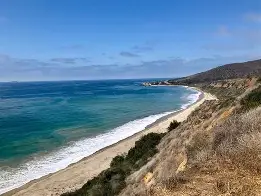
Just off the coast of Malibu, California, a network of underwater pods is preparing to achieve something unprecedented in U.S. water infrastructure: converting deep-sea ocean water into drinkable freshwater using only the pressure of the ocean itself. This innovative system, known as Water Farm 1, is being developed by OceanWell, a Santa Monica-based water technology company, in partnership with the Las Virgenes Municipal Water District. By the year 2030, the project aims to produce up to 60 million gallons of freshwater per day—enough to supply roughly 450,000 people, equivalent to the population of Long Beach.
The urgency behind this initiative is clear. California has faced drought conditions in 10 of the past 15 years, with 2022 ranking among the driest on record. As snowpacks diminish, aquifers shrink, and the Colorado River struggles under increasing demand, state officials are under mounting pressure to diversify water sources and build climate-resilient infrastructure.
Water Farm 1 represents a first-of-its-kind approach to desalination. Unlike traditional coastal plants that require extensive infrastructure and consume large amounts of energy, this system operates 400 meters below the ocean’s surface, using natural hydrostatic pressure to power its reverse osmosis process. Each modular pod filters seawater into potable water without releasing concentrated brine—a common environmental concern in legacy systems. According to OceanWell CEO Robert Bergstrom, the project is about creating infrastructure that can endure climate extremes and deliver long-term resilience.
Pilot tests conducted in March 2025 at the Las Virgenes Reservoir demonstrated that OceanWell’s LifeSafe™ intake system could operate effectively in biologically active environments while protecting marine ecosystems. Each pod is capable of generating approximately one million gallons of freshwater per day, and dozens are expected to be deployed off Malibu’s coast. Internal data from OceanWell suggests the system will consume up to 40% less energy than conventional desalination plants, while avoiding the need for large onshore facilities—often a flashpoint for environmental opposition.
Beyond its technological innovation, Water Farm 1 is also a logistical collaboration. Seven California water agencies have joined forces to distribute the desalinated water to inland communities that lack direct access to the coast. Cities like Calabasas and Burbank face unique challenges, as they don’t have pipelines connecting them to ocean-based water sources. Burbank, for example, is working with the Metropolitan Water District of Southern California to develop a regional water exchange system that would allow partners to share water across the grid. An independent feasibility study is currently underway to determine how best to integrate this new supply into existing infrastructure and assess the costs involved.
Environmental oversight is a key component of the project. OceanWell has established Tribal and Environmental Working Groups to monitor the ecological impact of the offshore pods and guide the final layout of the installation. These teams are analyzing pilot data to ensure marine life remains undisturbed. The absence of brine discharge—a byproduct of conventional desalination that can alter local salinity and temperature—is a major ecological advantage. A 2023 study from the University of California, Santa Cruz found that brine plumes from surface plants can have long-term effects on benthic communities and larval fish populations.
While the potential benefits are significant, experts remain cautiously optimistic. Dr. Mark Gold, Adjunct Professor at UCLA’s Institute of the Environment and Sustainability, noted that while the concept is promising, its success will depend on how well it performs at scale. “We need solutions that are cost-effective, durable, and don’t add new stressors to marine ecosystems,” he said. “Proof is in the performance. There’s a difference between a well-meaning pilot and a fully operational facility.”
(Source: Daily Galaxy)